
Bell’s palsy is a sudden weakness or paralysis of the muscles on one side of the face, causing noticeable drooping. It is usually temporary. This may result in an uneven smile or difficulty closing the eye on the affected side. The condition can occur at any age and is typically linked to inflammation or irritation of the facial nerve, often triggered by a viral infection.
Common symptoms may include mild weakness to complete paralysis on one side of the face that develops over several hours or days, facial drooping, and difficulty making expressions such as smiling or closing the eye. Other possible symptoms are drooling, pain around the jaw or behind the ear, increased sensitivity to sound on the affected side, headache, loss of taste, and changes in tear or saliva production (Mayo Clinic Online).
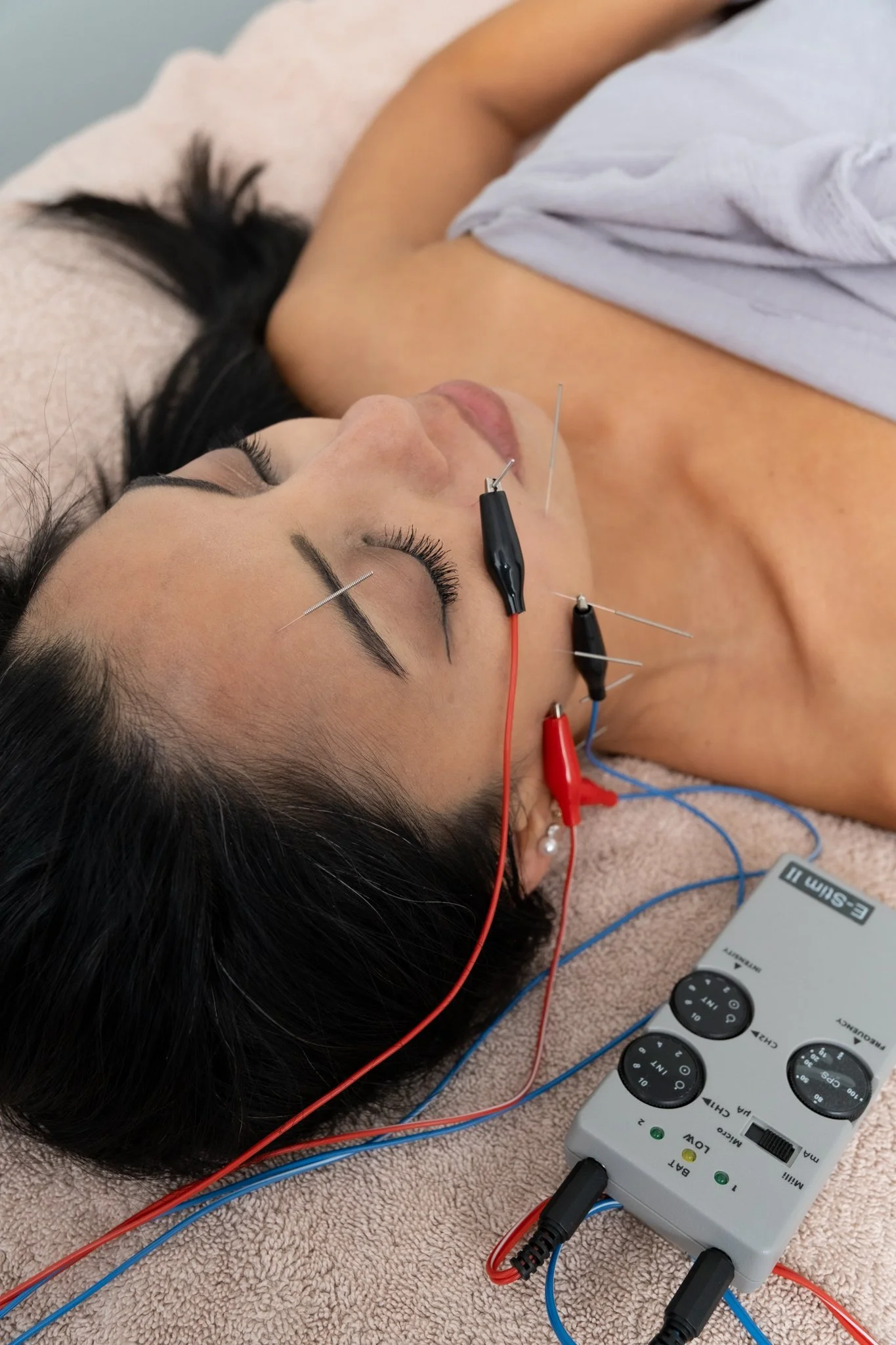
In Western medicine, treatment for Bell’s palsy often includes antiviral and/or corticosteroid medications. About 85% of cases resolve naturally without medical intervention. Facial physical therapy can also be beneficial in restoring muscle tone and function.
In Traditional Chinese Medicine (TCM), facial paralysis—often referred to as “deviated mouth”—is viewed as a manifestation of “wind invasion,” which occurs when the body’s qi, is weakened. Qi is considered the life force that maintains harmony and protects the body from illness. When qi is deficient, the body becomes more susceptible to external pathogens that can lead to imbalance and disease (Chen et al., 2022).
A review by Chen et al. (2022) examined six studies involving 537 participants to assess acupuncture’s effectiveness for Bell’s palsy. Five studies used acupuncture alone, and one combined it with medication. Many participants reported improvement, and no adverse side effects were noted.
A 2019 study conducted in Hubei, China, investigated acupuncture and moxibustion for Bell’s palsy and found that early intervention shortened healing time and improved recovery outcomes (Mao et al., 2019).
Zhou et al.’s 2023 systematic review and meta-analysis concluded that electro-acupuncture provided greater benefits for patients with intractable facial paralysis compared to traditional acupuncture without electrical stimulation.
In a 2015 randomized controlled trial, Kwon et al. compared acupuncture treatment to a no-treatment group in Korea. Participants in the acupuncture group received treatments three times per week for eight weeks (24 sessions total), with standardized acupuncture points selected from Korean medical texts and expert consensus. The acupuncture group showed significant improvement compared to those who did not receive treatment.
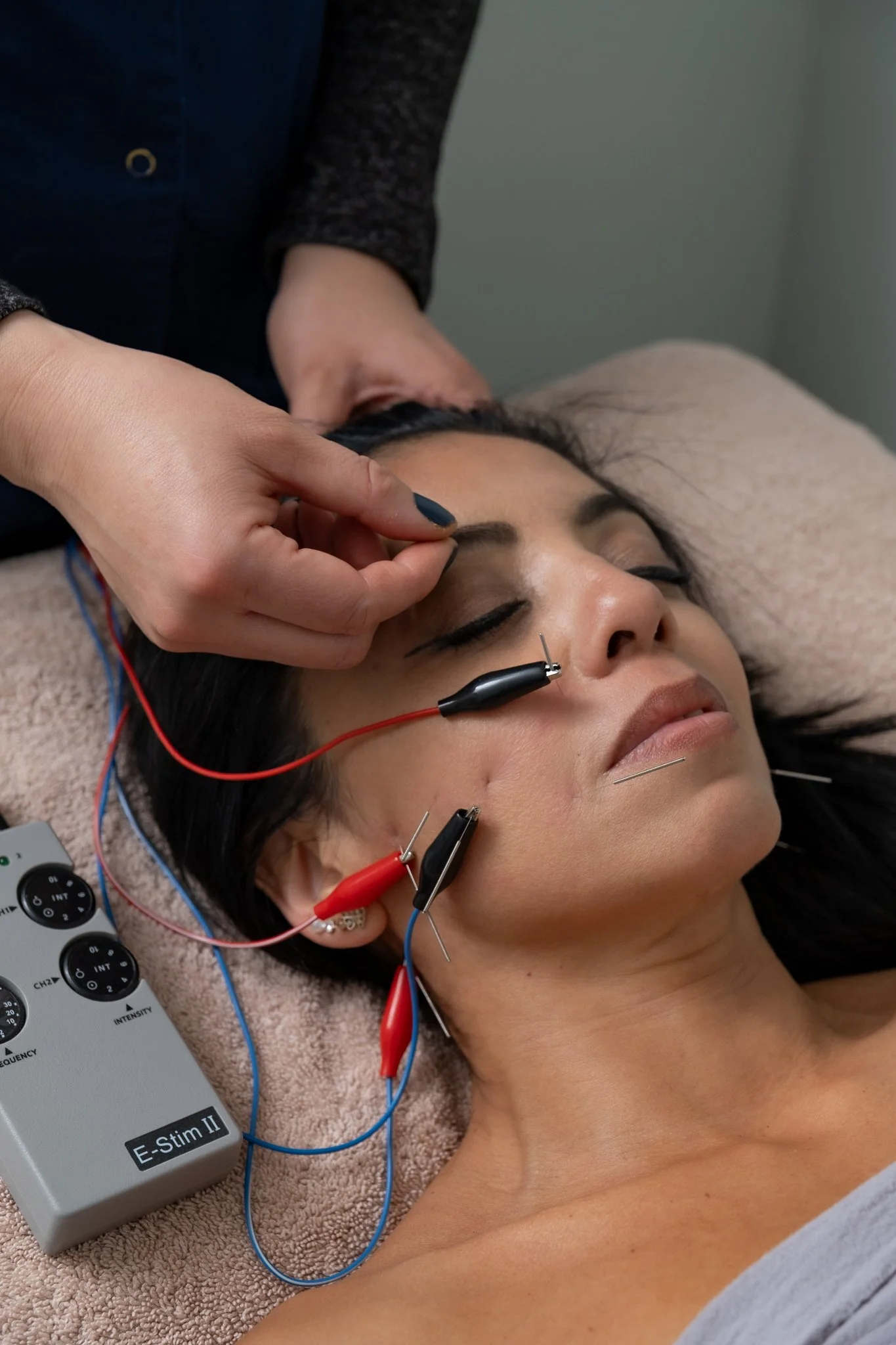
Photos by Chanel Matsunami Govreau featuring Mikaila Rosado
Similarly, a 2019 systematic review and meta-analysis by Zhang et al. found that acupuncture increased both the cure rate and overall effectiveness compared to medication alone.
According to the Mayo Clinic, several viruses have been associated with Bell’s palsy, including herpes simplex, varicella-zoster (chickenpox and shingles), Epstein-Barr, mumps, influenza, adenovirus, and coxsackievirus (which causes hand-foot-and-mouth disease).
In my clinical experience, beginning acupuncture treatment as soon as possible can be highly beneficial, as delayed care may lead to chronic cases. I typically recommend acupuncture sessions two to three times per week for at least two to three weeks, though some individuals may require longer treatment. Acupuncture can safely be used alongside conventional medications prescribed for Bell’s palsy without interference.
Written by Dr. Emily Siy, DACM on 10/19/25 posted on 11/10/25
Use the code ‘BLOG’ to receive $25 off an Initial Acupuncture visit or Follow up acupuncture visit
You might also be interested in reading: Non-Alcoholic Fatty Liver Disease and Acupuncture or Knee Injury Case Series Comparison
Sources
Chen, N., Zhou, M., He, L., Zhou, D., & Li, N. (2022). Acupuncture for Bell’s palsy (Issue 3). Cochrane Database of Systematic Reviews
Kwon, H.-J., Choi, J.-Y., Lee, M. S., Kim, Y.-S., Shin, B.-C., & Kim, J.-I. (2015). Acupuncture for the sequelae of Bell’s palsy: A randomized controlled trial. Trials, 16, Article 246
Mao, H., Huang, W., Ding, D., Yao, M., Zhang, T., & Xiao, B. (2019). Acupuncture and moxibustion combined with western medication for ninety cases of Bell's palsy at different stages: A randomized controlled trial. Journal of Traditional Chinese Medical Sciences, 6(1), 51–57.
Mayo Clinic Staff. (2024, March 15). Bell’s palsy – Symptoms & causes. Mayo Clinic Website
Zhang, R., Zhang, T., & Li, Y. (2019). Compare the efficacy of acupuncture with drugs in the treatment of Bell’s palsy: A systematic review and meta-analysis. Medicine, 98(51), e18436
Zhou, Y., Dong, X., Xing, Y., Wang, R., Yang, S., Han, Y., & Wang, D. (2023). Effects of electroacupuncture therapy on intractable facial paralysis: A systematic review and meta-analysis. PLOS ONE, 18(7), e0288606