Being Chinese and Wellness Trends
In Response To Recent Trends on Social Media

Photo by Gidra Studios
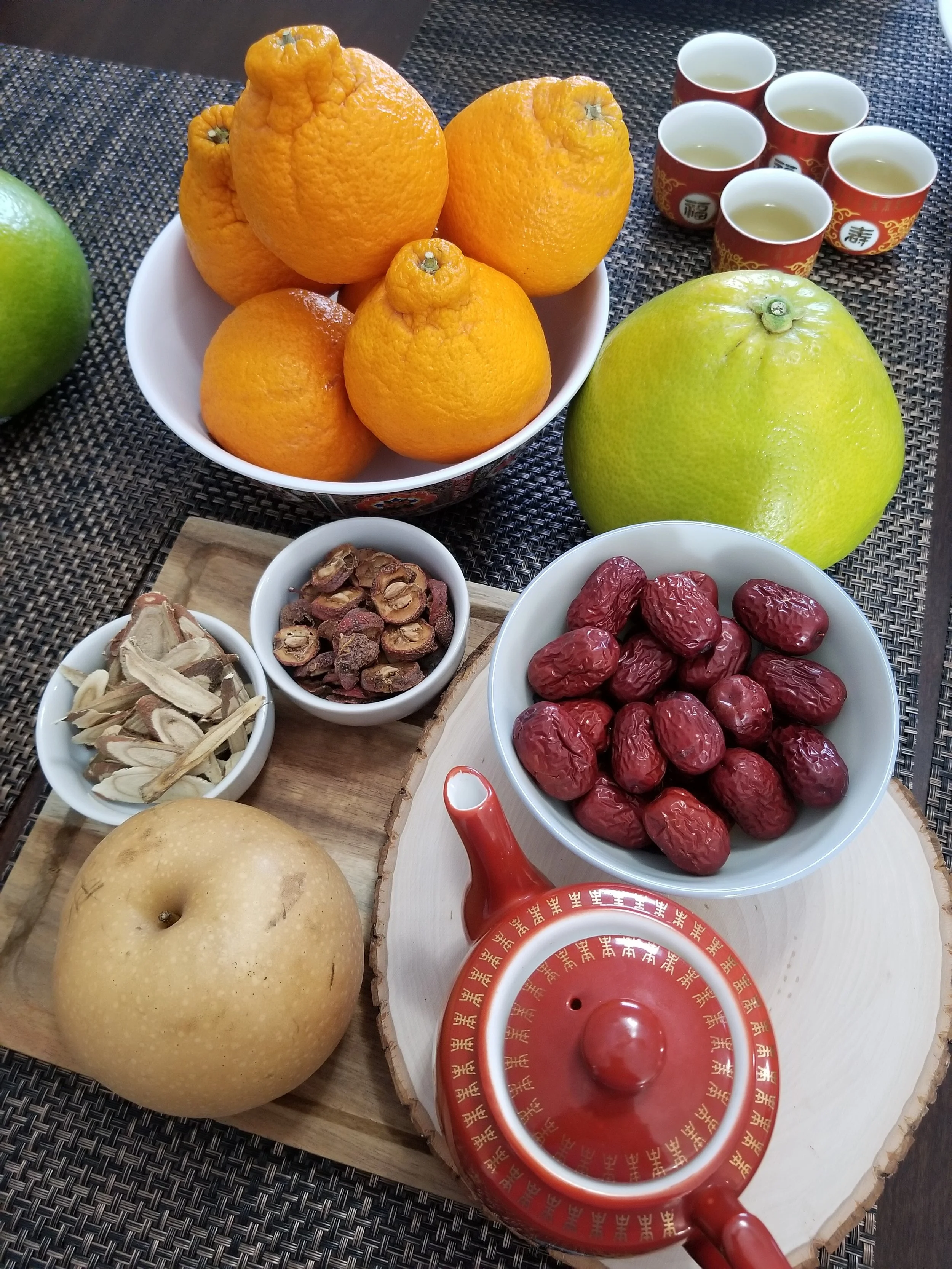
The Chinese Baddie Trend started long before Sherry told everyone to drink hot water. About eight or nine years ago it was facial gua sha and jade facial tools. It’s also ear seeds, mushroom soups, goji berries and jujube dates. It’s thinking becoming an acupuncturist is the next step up from being a holistic nutritionist or yoga instructor. It is rugs, porcelain, teas and Chinese art and furniture. And now it’ll be Lunar New Year.
When ‘Being Chinese’ trends on social media as it is lately, it is a reminder that it was only 6 years ago, around the time of the Chinese New Year in 2020 when people avoided Chinatown like we (Chinatown residents, Chinese Americans) started the plague. The plague that had not yet shut down parts of the world. The many people who shunned us and our part of the city were also the last to slap masks on their faces to stop the spread of said illness. Today Chinatown is FULL of tourists again. So much so that people are searching for our cultural practices as trends. Flooding our herb shops and supermarkets in order to buy up our ingredients in the name of being a “Chinese Baddie”.
I am not against cultural sharing. In fact, it has been one of the best ways to build strong friendships in my life. I have been privileged to learn about my friends families’ stories, food, dance and cultural holidays. I get to understand the people around me in a deeper context. Genuine curiosity and learning is such a beautiful part of building relationships and community. Cultural appreciation is beautiful when it happens but it takes time and trends are quick and dirty. They are often too superficial to really constitute as anything but appropriation. As a person of Asian descent who attended 5 years of acupuncture school in the United States, even those 5 years of study does not make you immune from cultural appropriation. Though it is a lot of time to study, does not mean everyone is doing it is a critical thinker or can genuinely appreciate a culture and the context of how it exists when it is removed from its roots. Acupuncture schools in the US are also primarily taught through and for a Western mindset. One that misses cultural contexts.
The most recent trend explained —Why are we drinking hot water? Not only is it warming to your insides which promotes good circulation in the digestive system and reproductive organs, but boiled water is also cleaner. I know we live in a country that recently has become more adverse to public health measures so I hate to break it you, drinking hot water and tea was also a public health measure. Tea leaves in a pot often signified that the water had been boiled and therefore was decontaminated and safe to drink. One of the most important parts of Chinese Medicine that is missed in Western societies is the prevention part of it. Preventing a disease is considered the best cure and boiling water does that in two ways.
How Do Trends Impact Communities?
Something I have seen in Chinatown is crowds of tourists in our grocery stores buying up staple ingredients. I’ve seen local herb shops become inundated with people from all over seeking help and also pressuring the herbalists to take their cases when they are already overbooked. I’ve seen herb shops run out of normal supplies that many people from the community use. Most of the people who come to Chinatown seeking these wellness trends are generally respectful but it impacts the community. I think its really important for people to understand that we are a community and that Chinatown doesn’t exist as a tourist exhibition. This is our culture, that people —actually human beings, had to rebuild here, in this city, in this country because people wanted us dead. There is a certain amount of violence attached to the act of coming in, wanting to consume someone else’s cultural identity without thought or care. Discrimination exists and in normal everyday society, a lot of people allow it to be ok, and there fore places like Chinatown need to exist. Cultural neighborhoods don’t exist for other people’s amusement, but first and foremost for safety.
What is Orientalism?
Orientalism is a term coined by Palestinian scholar, Edward Said. “It is the Western way of perceiving, understanding and representing the ‘orient’ that are founded upon the material realitiy of unequal power relations between the West and the East and upon the belief in the essential difference between the two.” as said by Mari Yoshihara in Embracing the East
Long before there were Asians in the Americas, Western ideas about the “Orient” laid a foundation of how Asia, Asians, Middle Eastern and North Africans would be viewed and treated in the West. Asia was already viewed as “other” and exotic. So much so that it both fascinated and terrified Europeans. Such opinions about the East created by the West justified European conquest and the treatment of all things Asia as homogenous. (Erika Lee)
Consider that at one point, someone delineated East and West in order to other one group. It also allowed the West to be in charge of deciding what and who were of value and any given time. Even today. This is the reason the word “Oriental” was removed from government documents during the Obama administration in the US.
Actually Being Chinese
Being Chinese, in the United States can be an extremely varied experience. We all hold such unique lives and identities. China is also a huge country, with its own varying subcultures and experiences as well as the Chinese people who have migrated to other parts of the world and ended up in the United States. People have mixed identities, appearances and some have adoptee experiences. For me, being Chinese meant going to Chinese School every Sunday for 10 years. It meant I was othered in white spaces and also othered in Chinese spaces. It meant that people would question me for the rest of my life where I was born and where my family was from. It meant that I had to learn from my parents about racism and discrimination when I was elementary school age. It also meant my dad had to teach me the history of Anti-Chinese laws in the the United States outside of school learning. It meant having a huge community that became family in order to experience our cultural holidays and foods. It meant seeing how Western Medicine was utilized while also being able to take care of a lot of things at home with Chinese Medicine. It means having to know about other Chinese and Asian experiences that are not my own, because we are seen as a monolith and the people that other us, expect us to know about each other because though we are different, they want to treat us all the same. It meant experiencing anti-Chinese sentiments during 2020 until today. We cannot take our ethnicity off like clothing, accessories, licenses or degrees.
Being An Ethical Consumer
Learning about a culture that is not yours should be ok as long as we can all be respectful to one another. We will all inevitably make mistakes. You can still genuinely apologize and course correct. Being an ethical consumer of culture that is not your own should be done with care, concern, curiosity and respect. All of which take time, thoughtfulness and effort. Step into situations with gratitude, and without the expectation of privilege. Be humble and open when you’ve been invited in. Your need for criticism usually means you might not be worthy or ready to be given the information that is being shared with you.
Written by Dr. Emily Siy, DACM 2/12/26, posted on 2/16/26
You might also be interested in reading: Eradicating the O-Word, Feng Shui Rituals for Lunar New Year, Why Am I Crying During Acupuncture
Sources:
Lee, Erika (2015) The Making of Asian America, A History Simon & Schuster pages 6-7
Yoshihara, Mari (2003) Embracing the East, White Women and American Orientalism Oxford Press page 3