
Endometriosis and Acupuncture
Endometriosis is a condition in which endometrial tissue that lines that uterus, grows outside the uterus. According to Johns Hopkins “Endometriosis affects up to 10% of women between the ages of 15 and 44.” It usually effects areas on or around reproductive organs in the pelvis or abdominal area including: fallopian tubes, ligaments around the uterus, the lining of the pelvic cavity, ovaries, the outer surface of the uterus, the space between the uterus, rectum or bladder. It can also be found on or around the bladder, cervix, intestines, rectum, stomach, vagina or vulva. The endometrial lining that grows on these areas does not shed during the menstrual cycle like the endometrial tissue inside the uterus, instead there is a build up of abnormal tissue that causes inflammation, scarring and painful cysts. It can cause a build up of fibrous tissues between the organs causing them to adhere to each other. (Johns Hopkins)
Endometriosis can cause significant disability with severe pain, difficult periods, pelvic or back pain. It can also cause pain during sex, fatigue, bowel conditions, issues or pain with urination, heavy and unmanageable periods, long periods, spotting or bleeding between periods.
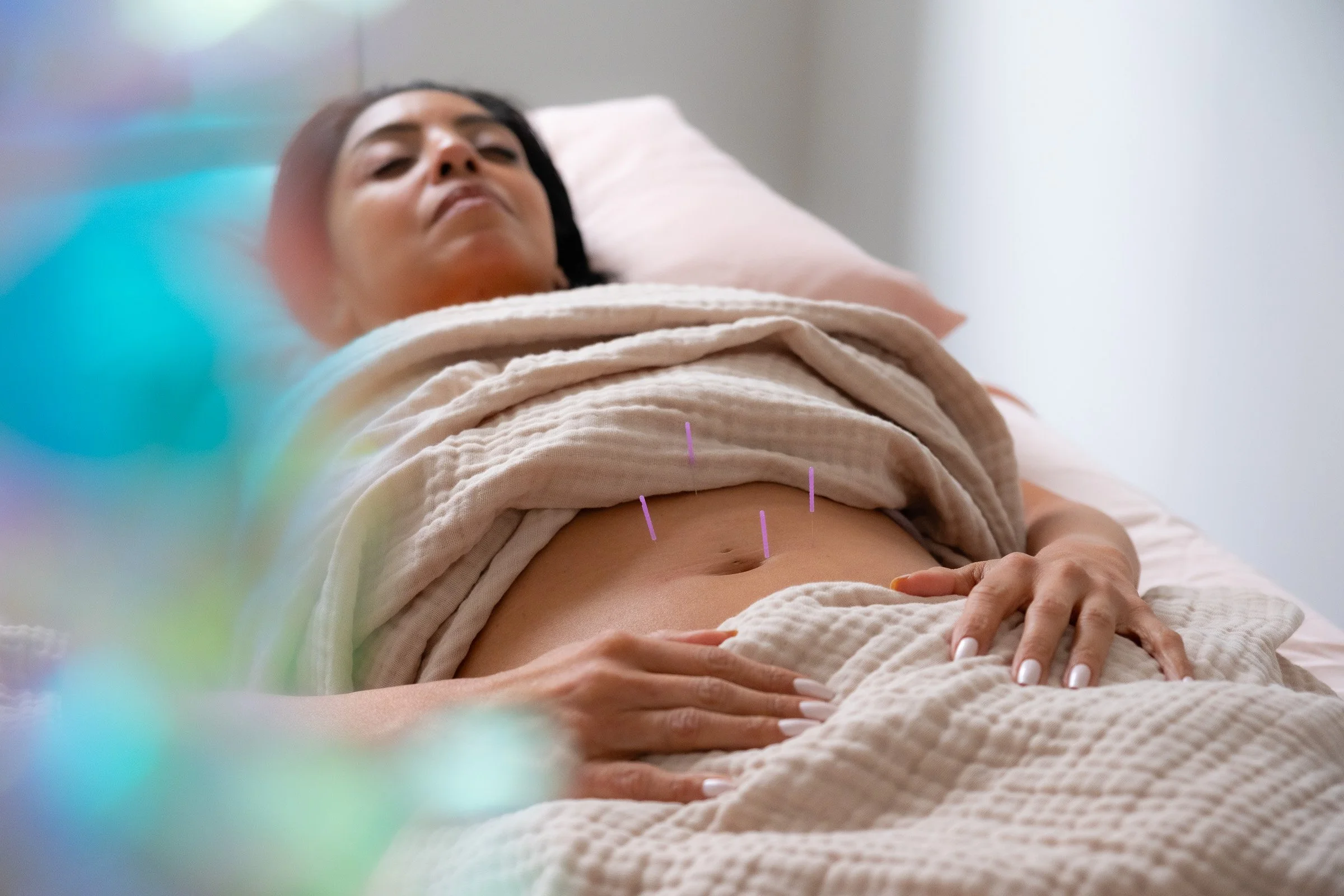
A research review in 2023 was conducted on acupuncture and moxibustion for endometriosis and it was found that the combined therapy improved pain and quality of life. (Wang, et. al. ) Another 2023 meta-analysis and review (Giese et. al) concluded that acupuncture for endometriosis improved pelvic pain and should be considered a treatment option for endometriosis. Chen et. al (2024) review also showed that acupuncture alleviated painful periods, pelvic pain and reduced the size of nodules, thus improving quality of life. A 2023 randomized control trial found acupuncture effective and safe for treating dysmenorrhea in those with endometriosis. It showed that it shortened the duration of pain and improved the overall quality of life. It also, showed that the effects fade after treatment stops.
In Chinese Medicine, endometriosis, how it often presents and how it is described in Western Medicine, is a form of blood stasis. It can also present as dampness, qi deficiency and eventually yin deficiency. Each person can present a unique pattern so it is important to consult with your Chinese Medicine doctor about your specific situation. It is important for those with endometriosis to understand that the condition progresses with time and frequent, regular and continued treatment is recommended. Please be sure to discuss your case with your medical team and your Chinese Medicine doctor.
Written by Dr. Emily Siy, DACM, L.Ac. on 9/4/26, posted on 9/21/26
Use the code ‘BLOG’ to receive $25 off an Initial Acupuncture visit
You might also be interested in reading: PCOS renamed, Chinese Medicine and PCOS, Preparing for Pregnancy
Sources
Chen, C., Li, X., Lu, S., Yang, J., & Liu, Y. (2024). Acupuncture for clinical improvement of endometriosis-related pain: A systematic review and meta-analysis. Archives of Gynecology and Obstetrics, 310(4), 2101–2114.
Giese, N., Kwon, K. K., & Armour, M. (2023). Acupuncture for endometriosis: A systematic review and meta-analysis. Integrative Medicine Research, 12(4), 101003.
Johns Hopkins Medicine. (n.d.). Endometriosis. Johns Hopkins Medicine.
Li, P. S., Peng, X. M., Niu, X. X., Xu, L., Hung, H. Y., et al. (2023). Efficacy of acupuncture for endometriosis-associated pain: A multicenter randomized single-blind placebo-controlled trial. Fertility and Sterility, 119(5), 815–823.
Wang, Y., Li, Y., Zhang, Y., Liu, Y., & Zhang, Y. (2023). Acupuncture and moxibustion for endometriosis: A systematic review and meta-analysis. Complementary Therapies in Medicine, 77, 102972.